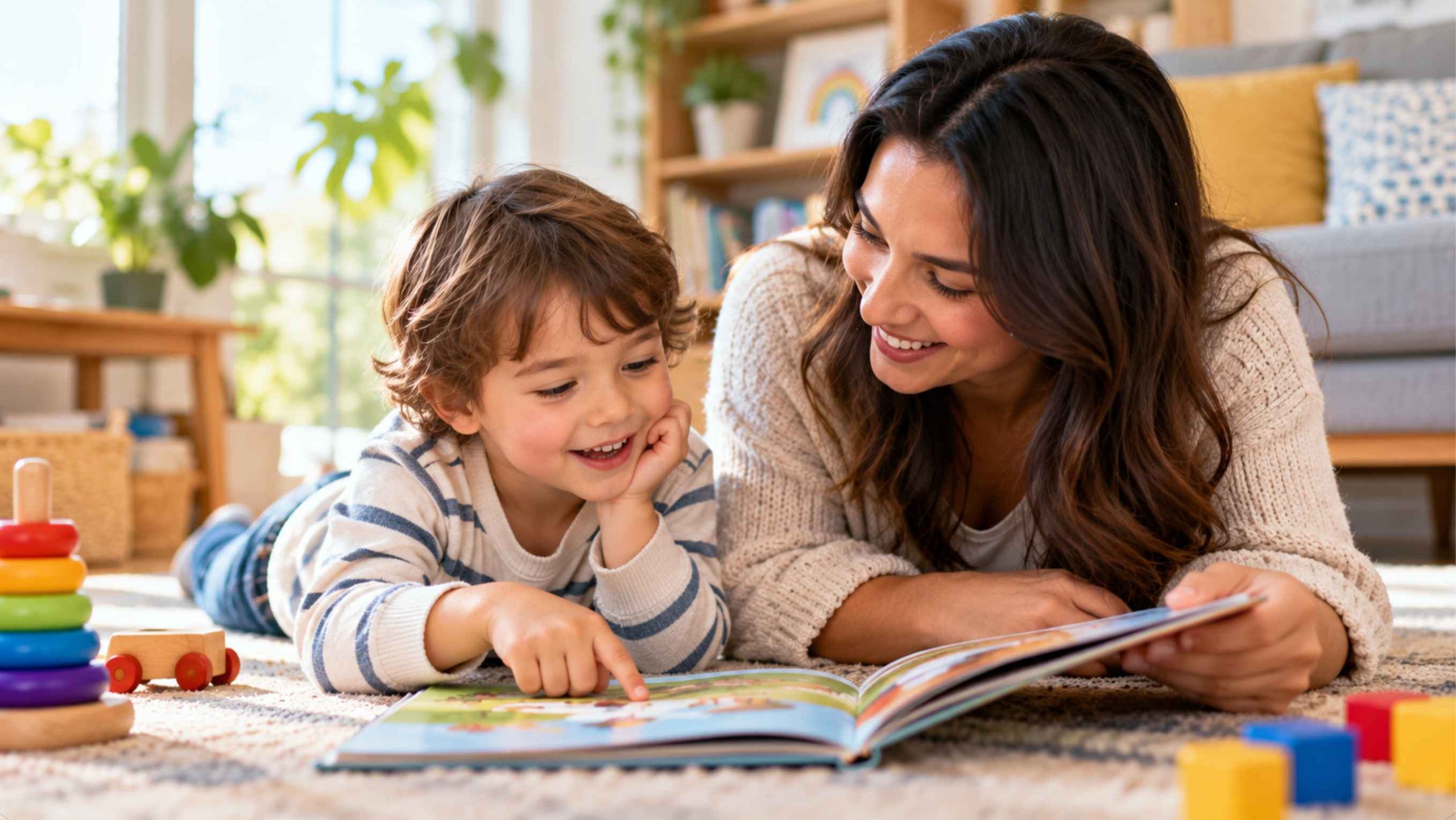
Some of the best communication opportunities happen during ordinary family moments rather than formal teaching activities.
Mealtimes, bath time, getting dressed, playing on the floor, reading before bed, or walking to the park all create natural chances for children to hear language, respond, ask questions, and share ideas.
Parents and caregivers do not need to turn home life into a therapy session. In fact, communication support is often most useful when it feels relaxed, responsive, and connected to what the child is already doing.
The goal is not perfect speech or constant correction. It is to create more opportunities for meaningful interaction.
Talk During Everyday Routines
Daily routines are naturally repetitive, which makes them useful for language learning.
While getting ready in the morning, you might name clothing items, describe actions, or talk about what comes next.
During meals, you can comment on what people are eating, ask simple questions, or talk about what happened earlier in the day.
In the car or on a walk, you might notice things together and describe what you see.
These conversations do not need to be complicated.
Children benefit from hearing language connected to real experiences they understand.
Follow the Child’s Interests
Communication is often easier when the topic already matters to the child.
If a child is interested in trains, animals, blocks, cooking, or a favourite story, use that interest as a starting point.
Instead of directing every activity, join what the child is already focused on.
Comment on what they are doing.
Ask occasional questions.
Add new words naturally.
This can make communication feel more like shared attention and less like a test.
Give Children Time to Respond
Adults often fill silence quickly.
A question is asked, the child pauses, and the adult immediately repeats the question, rephrases it, or answers for them.
Sometimes children simply need more processing time.
After asking a question or making a comment, try pausing for a few extra seconds.
That pause can create room for the child to organize a response.
The goal is not to stare or create pressure. It is to communicate that there is enough time for them to respond in their own way.
Expand Instead of Correcting Constantly
When a child says something, adults can model slightly more complete language without demanding repetition.
For example, if a child says, “Dog run,” a caregiver might respond, “Yes, the dog is running fast.”
If a child says, “More juice,” an adult might say, “You want more juice.”
This kind of expansion keeps the conversation moving while providing a richer language model.
It is often more natural than repeatedly asking a child to say something again “the right way.”
Communication should remain interactive, not become a constant correction exercise.
Read Together Without Making It a Quiz
Books create many opportunities for language, but reading does not need to become a question-and-answer session.
You can point to pictures, make comments, predict what might happen next, or connect the story to something familiar.
For younger children, repeating favourite books can be helpful because familiarity makes it easier to anticipate words and ideas.
For older children, conversation about characters, events, or opinions can add more depth.
If a child does not want to answer questions, simply reading and enjoying the story together is still valuable.
Use Play as a Communication Opportunity
Play creates natural reasons to communicate.
A child may request an object, describe what is happening, negotiate a role, or create a story.
Adults can support this without taking over.
During pretend play, you might add a simple idea to the story.
During building activities, you might describe size, position, colour, or action.
During a game, you might talk about turns, rules, or what happens next.
The most important part is staying connected to the child’s play rather than turning every activity into instruction.
Songs and Rhymes Can Support Participation
Songs, nursery rhymes, and repetitive phrases can make communication playful.
Children may enjoy joining familiar words, filling in predictable endings, or copying movements connected to songs.
Repetition can help make language easier to anticipate.
Again, participation should be enjoyable rather than pressured.
A child does not need to repeat every word perfectly for the activity to be useful.
Reduce Distractions During Important Conversations
Background television, multiple devices, or competing noise can make communication more difficult.
That does not mean families need a completely silent home.
But during moments when a child is trying to explain something or learn new information, reducing unnecessary distractions can make listening and responding easier.
Turning down the television during dinner or putting phones aside during a short conversation can create more shared attention.
Small environmental changes can improve the quality of interaction.
Avoid Comparing Children
Children develop communication in different ways and at different rates.
Comparisons with siblings, cousins, classmates, or children online can create unnecessary worry.
One child may talk frequently but use shorter sentences. Another may speak less often but use more detailed language when they do speak.
A communication concern should be considered in the context of the individual child rather than based only on comparison with someone else.
If there are persistent concerns, professional assessment can provide more useful information than informal comparison.
Multilingual Families Should Use Their Strongest Languages
Families do not need to avoid multilingual communication out of fear that more than one language will confuse a child or cause a language disorder.
Children can grow up learning multiple languages.
Parents and caregivers should feel comfortable using the languages in which they communicate most naturally and meaningfully.
Rich interaction in the family’s strongest languages supports connection, storytelling, culture, and everyday communication.
If a child has communication difficulties, those concerns should be assessed appropriately rather than assuming multilingualism is the cause.
Home Support Should Feel Natural
Parents and caregivers are not expected to become substitute therapists.
Home should still feel like home.
Supportive communication can happen through ordinary conversation, play, shared routines, and responsive interaction.
If every exchange becomes correction or practice, communication can begin to feel stressful.
A better goal is to create more opportunities for connection.
Talk with the child, not at them.
Notice what interests them.
Respond to what they communicate.
Model language naturally.
Leave room for pauses.
These small habits can fit into everyday life without turning family routines into formal exercises.
When Professional Assessment May Be Worth Considering
Some communication differences are temporary or simply part of individual development.
Others may be persistent enough that parents or caregivers want clearer guidance.
Concerns might involve speech clarity, language development, fluency, social communication, voice, or everyday participation.
When questions continue over time, pediatric speech therapy can provide an individualized assessment of a child’s communication needs and help families understand what kinds of support may be appropriate.
Assessment does not mean assuming a diagnosis.
It is a way to gather more information about the child’s communication strengths, needs, and everyday goals.
Focus on Connection, Not Perfection
Children do not need perfect communication to have meaningful interactions.
A conversation can include gestures, partial words, pauses, repetition, facial expressions, questions, and shared attention.
What matters most is that the child has opportunities to communicate and feels that their attempts are noticed and valued.
Families can support this by slowing down, responding with interest, modelling language, and creating everyday moments where communication has a real purpose.
The strongest communication routines are often the simplest ones.
Talking while making breakfast.
Reading a favourite book.
Singing in the car.
Describing what you see on a walk.
Playing together on the floor.
These moments build connection first.
And when communication support is needed, that connection remains the foundation.
The goal is not to make every interaction perfect. It is to help children experience communication as something useful, enjoyable, and shared.